History
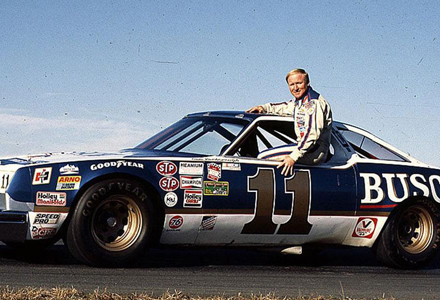
Founded in 1969 by John Bishop with support from NASCAR's Bill France Sr., the International Motor Sports Association (IMSA) has grown into North America's premier sanctioning body for sports car endurance racing. Initially featuring formula cars, IMSA quickly pivoted to GT and prototype racing in the early 1970s, famously hosting iconic events like the 24 Hours of Daytona. Despite challenges from the oil crisis, it flourished through the GTP era and eventually merged with the American Le Mans Series to form the modern WeatherTech SportsCar Championship.
Cars
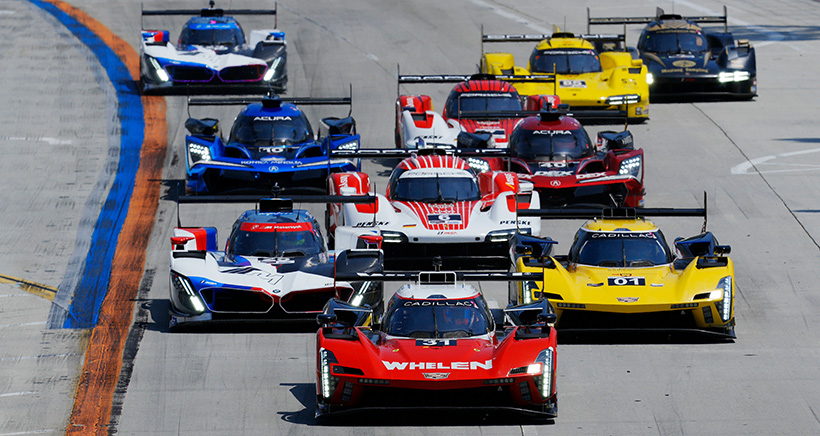
The cars of the IMSA WeatherTech SportsCar Championship represent a diverse, high-performance blend of top-tier prototypes and production-based GT machines, designed for thrilling multi-class endurance racing. At the pinnacle is the Grand Touring Prototype (GTP) class, introduced in 2023, featuring hybrid-powered, highly advanced prototypes from manufacturers like Acura, BMW, Cadillac, Lamborghini, and Porsche. Below them, the Le Mans Prototype 2 (LMP2) class offers competitive, spec-chassis racing. The field is balanced by two GT classes, GTD PRO and GTD, which feature race-prepped versions of exotic road cars from brands such as Corvette, Ferrari, Aston Martin, and Porsche. All cars are subject to Balance of Performance (BoP) adjustments, ensuring that different manufacturer technologies can compete evenly.
The Drivers
IMSA drivers are among the most versatile and talented racers in the world, specialized in navigating the intense, tactical, and physically demanding world of multi-class endurance racing. Operating in the WeatherTech SportsCar Championship, these athletes must maintain top-level precision while battling fatigue, navigating drastically different traffic conditions, and sharing their cockpit with teammates to tackle renowned endurance events like the Rolex 24 At Daytona and the Mobil 1 Twelve Hours of Sebring. The driver roster is a mix of elite factory drivers—often boasting backgrounds in Formula 1 or IndyCar—and skilled "Am" (amateur) drivers who provide funding and immense passion, allowing for a competitive field with a deep, diverse talent pool. Whether navigating torrential rain or driving at high speeds through the night, IMSA drivers are defined by their adaptability, relying on a blend of mental endurance, rapid driver changes, and strategic teamwork to succeed.
Legends of IMSA
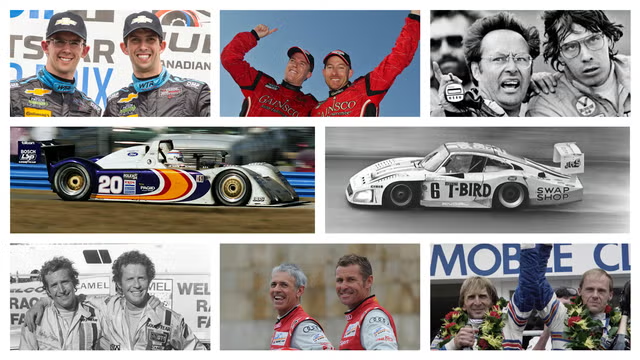
Established in 1969 by John and Peggy Bishop with support from Bill France Sr., the International Motor Sports Association (IMSA) has served as a premier proving ground for over five decades, building a rich lore filled with iconic drivers, manufacturers, and "bad boy" tales. The series’ history is defined by legendary figures like Hurley Haywood, a multiple-time winner of the Rolex 24 and Le Mans, and Peter Gregg, who dominated early with Porsche. The 1980s “drug-fueled” era brought intense competition and colorful personalities to the Camel GT series, while innovative, high-speed machines like the Porsche 962, Mazda RX-7, and Nissan GTP cars—driven by legends like Derek Bell and Geoff Brabham—cemented the sport's reputation for speed. Through the tumultuous shifts from the Camel GT to the modern era of the American Le Mans Series merger and the high-tech GTP/LMDh class, IMSA remains a unique, multiclass endurance stage that showcases the grit of drivers, engineers, and pioneering team owners.